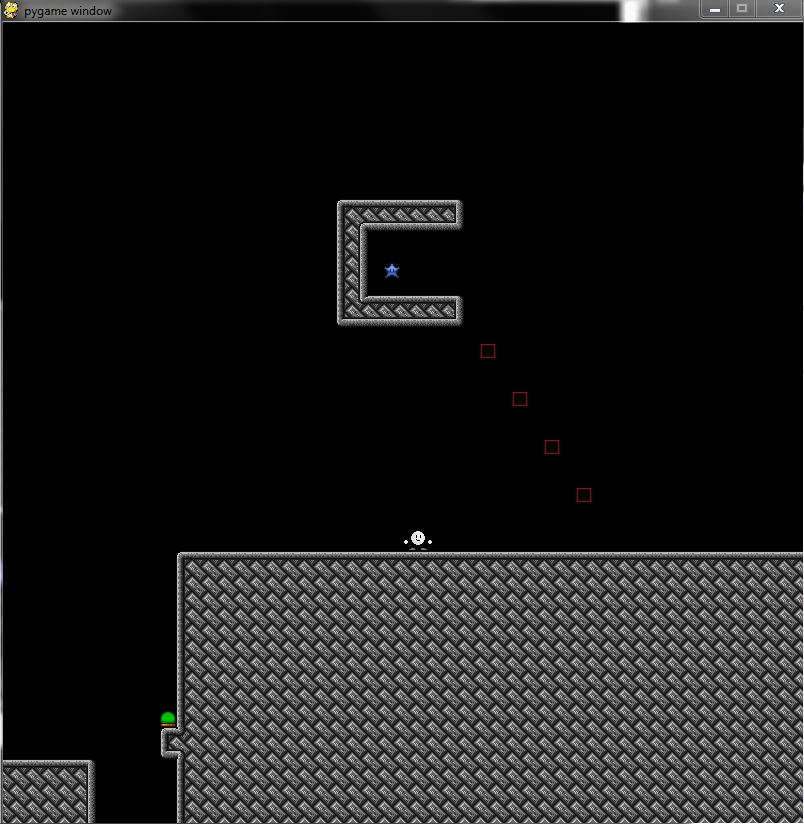
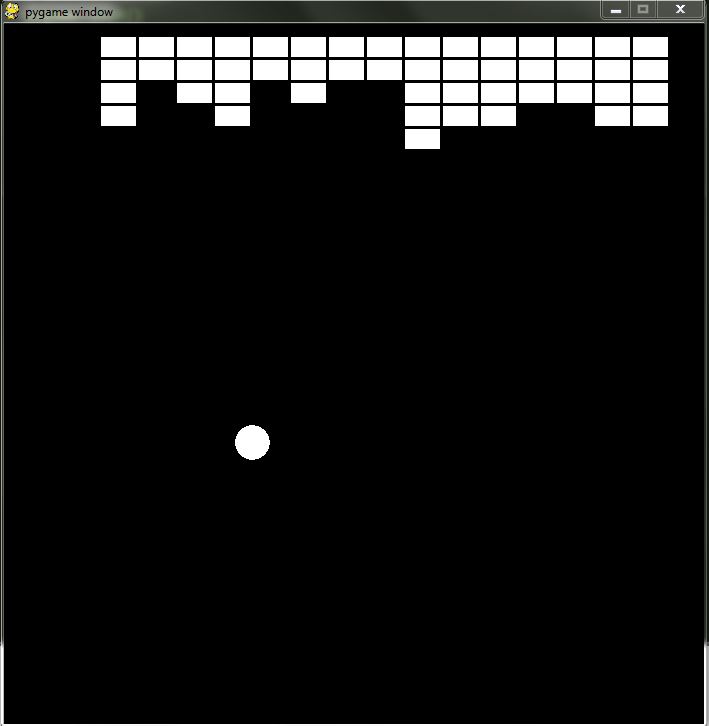
This project started of as a major work for my HSC software course. The only requirement was that it be an application developed in the Python language. I started on a rhythm game using the Pygame library, probably the most commonly used 2D game engine for python. The game consists of a main menu with many buttons leading to nowhere, a song selection screen and the rhythm game itself. There is one very short song to play exquisitely composed by a friend of mine.
Working on this project has further reinforced for me how important the idea of the Proof of Concept is. I had planned to implement battle mechanics to this game in some way and ended up discovering that hybridization of a pure rhythm game with other genres is actually quite difficult (although
Sequence seems to do it quite well). The issues largely come about from pacing and control. It's difficult to design a rhythm game in which the player is able to focus and control both the rhythm game and battle mechanics simultaneously.
Interestingly, something else that can detract from being able to focus properly in a rhythm game is how the notes are visualized. It seems that players tend to be able to score better with less frustration and more focus when they distinguish notes by colour rather than shape.
The player receives an accuracy score which is reduced by scoring 'bad notes', a mechanic designed to prevent players continuously smashing the score keys. A 'bad note' is scored when the player hits a score key when no note should be scored at that time.
The source is still
here on GitHub and a video
here on Youtube if you'd like to take a look. Feel free to fork this project or ask me how I did anything.